About
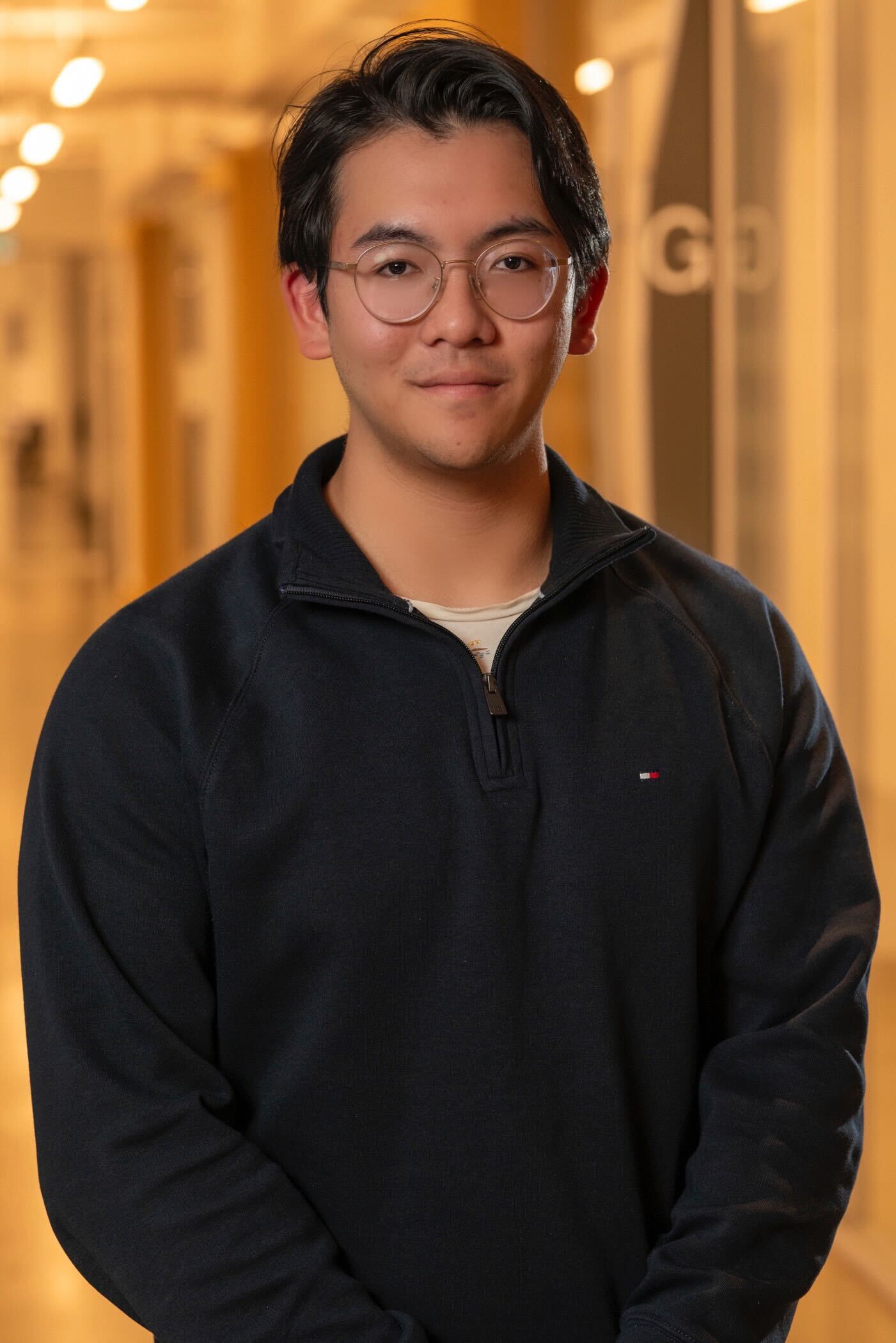
I am a PhD student at the Max-Planck Institute for Intelligent Systems and the ELLIS Institute of Tubingen under the supervision of Maksym Andriushchenko in the AI Safety and Alignment group. I completed my Masters in Artificial Intelligence at Université de Montréal, Mila and CRCHUM, co-advised by Prof. Bang Liu and Dr. Quoc Nguyen as part of the Applied Computational Linguistics Lab.
My current research focuses on understanding and evaluating long-horizon capabilities of AI agents, with particular emphasis on quantifying potential risks associated with increasingly autonomous AI systems. My main focus revolves around forecasting and automated AI R&D, which I believe to be essential benchmarks for assessing AI capabilities. During my Masters, I explored how large language models can be aligned and calibrated by leveraging insights from model interpretability, with a focus on concept-based explanations.
I am broadly interested in:
- Evaluation of AI agent capabilities
- AI Safety and LLM alignment
- LLM Post-training
During my undergraduate and graduate studies, I also led the UdeM AI undergraduate club, organizing networking and conference events. Outside of research, I am a big fan of racket sports.
Work Experience
Machine Learning Researcher Intern, RBC Borealis
May 2026 – Present
Working on automated AI R&D.
Selected Publications
ResearchArena: Evaluating Sabotage and Monitoring in Automated AI R&D
In Review
We introduce ResearchArena, a framework spanning four long-horizon AI R&D tasks that evaluates whether frontier agents can covertly sabotage the artifacts they produce, and whether monitors can catch them before deployment.
Evaluating Long-Form Forecasts by Their Effect on Downstream Predictions
ICML 2026 AI Forecasting Workshop
We propose evaluating long-form forecasts by how much they improve a downstream predictor’s accuracy on real-world events, rather than requiring a single ground-truth outcome.
[Paper]
QuantSightBench: Evaluating LLM Quantitative Forecasting with Prediction Intervals
arXiv preprint, 2026
We introduce a benchmark evaluating LLM forecasting through prediction intervals, finding that frontier models are systematically overconfident and fail to reach target coverage.
[Paper]
Activation Steering for Conditional Molecular Generation
AI4Mat Workshop @ NeurIPS 2025
We enable conditional molecular generation by directly manipulating internal LLM representations using concept bottleneck models and activation steering.
[Paper]
SHADES: Towards a Multilingual Assessment of Stereotypes in Large Language Models
NAACL 2025
We build and assess multilingual stereotypes across different LLMs.
[Paper]
Calibrating Large Language Models with Concept Activation Vectors for Medical QA
We propose a novel framework for calibrating LLM uncertainty through Concept Activation Vectors, improving safety and calibration in high-stakes medical decision making.
Atypicality-Aware Calibration of LLMs for Medical QA
Findings of EMNLP 2024
We propose a novel method for eliciting LLM confidence in Medical QA by leveraging insights from medical atypical presentations.
[Paper]